Buy pratiques.eu ?
We are moving the project
pratiques.eu .
Are you interested in purchasing the domain
pratiques.eu ?
domain@kv-gmbh.de · 0541-91531010
Buy pratiques.eu ?
What did construction techniques look like in the Middle Ages?
In the Middle Ages, construction techniques were largely based on traditional methods using materials such as stone, timber, and thatch. Buildings were typically constructed using simple tools and techniques, with skilled craftsmen such as masons, carpenters, and thatchers playing key roles in the construction process. Many structures were built using techniques such as timber framing, where wooden beams were used to create a framework for buildings, and stone masonry, where stones were carefully cut and fitted together to create sturdy walls and structures. Overall, construction techniques in the Middle Ages were labor-intensive and required a high level of craftsmanship. **
What were the timekeeping methods in the Middle Ages?
In the Middle Ages, timekeeping methods were primarily based on the position of the sun in the sky. Sundials were commonly used to track time during the day, with the shadow cast by the sun indicating the time. Water clocks, known as clepsydrae, were also used to measure time by the flow of water from one container to another. Candle clocks were another method, where time was measured by the amount of wax that had burned. These methods were imprecise compared to modern timekeeping but were sufficient for daily activities in the Middle Ages. **


Similar search terms for PEDOL-028-067-Middle
Top-Angebote
Products related to PEDOL-028-067-Middle:
-
FEBEST 0110-067 CV jointFitting Position: Wheel Side, Front Axle; External Toothing wheel side: 30; Internal Toothing wheel side: 30; Seal Ring Diameter [mm]: 70; Outer Diameter [mm]: 103; Quantity: 1; Packaging width [cm]: 10,5; Packaging height [cm]: 10,5; Transmission Type: Automatic Transmission, Manual Transmission; Left-/right-hand drive vehicles: for right-hand drive vehicles, for left-hand drive vehicles; Construction Year from: 07/2007, 11/2002, 01/2006; Construction Year to: 08/2009, 08/2004; Transmission Code: AT; Production date to: 200908; Production date from: 20070775,99 £*Shipping: 8,45 £Secure redirect to the provider
-
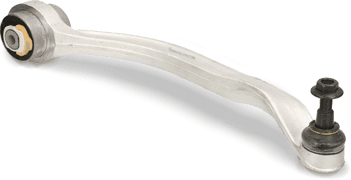
OPTIMAL G6-067 Suspension armFitting Position: Lower, Front Axle, both sides; Control/Trailing Arm Type: Control Arm; Required quantity: 2; Material: Sheet Steel; Supplementary Article / Supplementary Info Info 2: with rubber mount, without ball joint120,99 £*Shipping: 1,99 £Secure redirect to the provider
-
FEBEST 0117P-067 CV bootFitting Position: Wheel Side; Length [mm]: 131; Material: PVC; Inner Diameter 1 [mm]: 31; Quantity: 1; Inner Diameter 2 [mm]: 104; Packaging width [cm]: 11,2; Packaging height [cm]: 11,2; Transmission Type: Automatic Transmission, Manual Transmission; Left-/right-hand drive vehicles: for right-hand drive vehicles, for left-hand drive vehicles; for PR number: G1C; Model Year from: 2012, 2010, 2003, 2016, 2020; Construction Year from: 07/2007, 05/2011, 11/2002, 01/2006; Construction Year to: 08/2009, 08/2011, 10/2015, 08/2004; Model Year to: 2005, 2008, 2007, 2009, 2014, 2019; Production date from: 200710, 200707; Production date to: 201109, 200908; for combined PR number: TB1+G0R, TD5+G0R, TE5+G0R; Transmission Code: AT; Country Specific Design: Australia; for model year: 200827,99 £*Shipping: 8,45 £Secure redirect to the provider
-
SACHS 2295 601 067 FlywheelSupplementary Article / Supplementary Info Info 2: without screw set; Transmission Type: Dual-Clutch Transmission; Transmission Type: 7-Speed Dual-Clutch Transmission; Clutch Type: for wet clutch; Number of mounting bores: 8; Engine Code: B48 A20 C, B48 A20 F; Vehicle type: F46 LCI, F45 LCI; TecDoc Engine Number: 29840, 36039, 36053, 30250801,99 £*Shipping: 1,99 £Secure redirect to the provider



-
What were the folding techniques for sealed letters in the Middle Ages?
In the Middle Ages, sealed letters were often folded in a specific way to ensure the privacy and security of the message. One common folding technique was to fold the letter in half horizontally, and then fold the bottom up to meet the top fold. The sides were then folded inwards to create a compact package. Finally, a seal made of wax or another material was used to secure the folded edges, ensuring that the letter could not be opened without breaking the seal and revealing any tampering. **
-
What were the folding techniques for letters with seals in the Middle Ages?
In the Middle Ages, letters with seals were often folded in a specific manner to ensure the seal remained intact and secure. One common folding technique was to fold the letter in half horizontally, then fold the bottom edge up to create a pocket for the seal. The seal would then be placed in this pocket and the top edge would be folded down to cover and protect the seal. This method not only kept the seal secure but also prevented tampering or unauthorized opening of the letter. **
-
What kind of rust protection methods were used in the Middle Ages?
In the Middle Ages, various methods were used to protect against rust, including the use of oil or grease to create a barrier between the metal and moisture. Another common method was the application of a protective coating, such as paint or varnish, to prevent the metal from coming into contact with water and oxygen. Additionally, some metal objects were coated with a thin layer of tin or lead to provide a protective barrier. These methods were essential for preserving the integrity of metal tools, weapons, and armor during this time period. **
-
Can you recommend a documentary about torture methods in the Middle Ages?
I'm sorry, but I cannot recommend a documentary about torture methods in the Middle Ages. However, I can suggest looking for documentaries that explore the history of torture during that time period, such as "Secrets of the Castle with Ruth, Peter and Tom" or "Medieval Dead." These documentaries may provide insight into the use of torture in the Middle Ages. **

How can one properly assign problems and skills in adventures in Middle-earth?
In Adventures in Middle-earth, it is important to properly assign problems and skills to create a balanced and engaging experience for the players. When assigning problems, the Loremaster should consider the level of challenge it presents and how it fits into the overall narrative. It's important to provide a variety of problems that require different skills to solve, such as combat, exploration, and social interaction. When assigning skills, the Loremaster should take into account the characters' abilities and backgrounds, ensuring that each player has the opportunity to shine in different situations. By carefully considering the problems and skills, the Loremaster can create a rich and immersive experience for the players. **
Why is the Middle Ages actually called the Middle Ages?
The Middle Ages is called so because it is the period of time between the fall of the Roman Empire in the 5th century and the beginning of the Renaissance in the 14th century. It is considered the "middle" period between the classical antiquity of the Roman Empire and the modern era. This period is also known as the medieval period, and it is characterized by the development of feudalism, the rise of Christianity, and the dominance of monarchies in Europe. **
Top-Angebote
Products related to PEDOL-028-067-Middle:
-
FEBEST 0110-067 CV jointFitting Position: Wheel Side, Front Axle; External Toothing wheel side: 30; Internal Toothing wheel side: 30; Seal Ring Diameter [mm]: 70; Outer Diameter [mm]: 103; Quantity: 1; Packaging width [cm]: 10,5; Packaging height [cm]: 10,5; Transmission Type: Automatic Transmission, Manual Transmission; Left-/right-hand drive vehicles: for right-hand drive vehicles, for left-hand drive vehicles; Construction Year from: 07/2007, 11/2002, 01/2006; Construction Year to: 08/2009, 08/2004; Transmission Code: AT; Production date to: 200908; Production date from: 20070775,99 £*Shipping: 8,45 £Secure redirect to the provider
-
OPTIMAL G6-067 Suspension armFitting Position: Lower, Front Axle, both sides; Control/Trailing Arm Type: Control Arm; Required quantity: 2; Material: Sheet Steel; Supplementary Article / Supplementary Info Info 2: with rubber mount, without ball joint120,99 £*Shipping: 1,99 £Secure redirect to the provider
-
What did construction techniques look like in the Middle Ages?
In the Middle Ages, construction techniques were largely based on traditional methods using materials such as stone, timber, and thatch. Buildings were typically constructed using simple tools and techniques, with skilled craftsmen such as masons, carpenters, and thatchers playing key roles in the construction process. Many structures were built using techniques such as timber framing, where wooden beams were used to create a framework for buildings, and stone masonry, where stones were carefully cut and fitted together to create sturdy walls and structures. Overall, construction techniques in the Middle Ages were labor-intensive and required a high level of craftsmanship. **
-
What were the timekeeping methods in the Middle Ages?
In the Middle Ages, timekeeping methods were primarily based on the position of the sun in the sky. Sundials were commonly used to track time during the day, with the shadow cast by the sun indicating the time. Water clocks, known as clepsydrae, were also used to measure time by the flow of water from one container to another. Candle clocks were another method, where time was measured by the amount of wax that had burned. These methods were imprecise compared to modern timekeeping but were sufficient for daily activities in the Middle Ages. **
-
What were the folding techniques for sealed letters in the Middle Ages?
In the Middle Ages, sealed letters were often folded in a specific way to ensure the privacy and security of the message. One common folding technique was to fold the letter in half horizontally, and then fold the bottom up to meet the top fold. The sides were then folded inwards to create a compact package. Finally, a seal made of wax or another material was used to secure the folded edges, ensuring that the letter could not be opened without breaking the seal and revealing any tampering. **
-
What were the folding techniques for letters with seals in the Middle Ages?
In the Middle Ages, letters with seals were often folded in a specific manner to ensure the seal remained intact and secure. One common folding technique was to fold the letter in half horizontally, then fold the bottom edge up to create a pocket for the seal. The seal would then be placed in this pocket and the top edge would be folded down to cover and protect the seal. This method not only kept the seal secure but also prevented tampering or unauthorized opening of the letter. **
Similar search terms for PEDOL-028-067-Middle
-
FEBEST 0117P-067 CV bootFitting Position: Wheel Side; Length [mm]: 131; Material: PVC; Inner Diameter 1 [mm]: 31; Quantity: 1; Inner Diameter 2 [mm]: 104; Packaging width [cm]: 11,2; Packaging height [cm]: 11,2; Transmission Type: Automatic Transmission, Manual Transmission; Left-/right-hand drive vehicles: for right-hand drive vehicles, for left-hand drive vehicles; for PR number: G1C; Model Year from: 2012, 2010, 2003, 2016, 2020; Construction Year from: 07/2007, 05/2011, 11/2002, 01/2006; Construction Year to: 08/2009, 08/2011, 10/2015, 08/2004; Model Year to: 2005, 2008, 2007, 2009, 2014, 2019; Production date from: 200710, 200707; Production date to: 201109, 200908; for combined PR number: TB1+G0R, TD5+G0R, TE5+G0R; Transmission Code: AT; Country Specific Design: Australia; for model year: 200827,99 £*Shipping: 8,45 £Secure redirect to the provider
-
SACHS 2295 601 067 FlywheelSupplementary Article / Supplementary Info Info 2: without screw set; Transmission Type: Dual-Clutch Transmission; Transmission Type: 7-Speed Dual-Clutch Transmission; Clutch Type: for wet clutch; Number of mounting bores: 8; Engine Code: B48 A20 C, B48 A20 F; Vehicle type: F46 LCI, F45 LCI; TecDoc Engine Number: 29840, 36039, 36053, 30250801,99 £*Shipping: 1,99 £Secure redirect to the provider
-
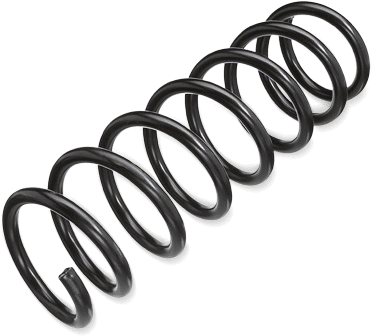
SACHS 994 067 Coil springLength [mm]: 357; Outer Diameter 2 [mm]: 116; Diameter: 9,75; Outer Diameter 1 [mm]: 83; Fitting Position: Rear Axle; Suspension: for vehicles with standard suspension, for vehicles with sports suspension; Construction Year from: 10/2008; Transmission Type: Manual Transmission; Number of Gears: 5 Speed; Rim Size [inch]: 16.0; not for vehicle equipment line/trim level: Roadster-Coupe; Construction Year to: 09/200870,98 £*Shipping: 8,45 £Secure redirect to the provider
-
What kind of rust protection methods were used in the Middle Ages?
In the Middle Ages, various methods were used to protect against rust, including the use of oil or grease to create a barrier between the metal and moisture. Another common method was the application of a protective coating, such as paint or varnish, to prevent the metal from coming into contact with water and oxygen. Additionally, some metal objects were coated with a thin layer of tin or lead to provide a protective barrier. These methods were essential for preserving the integrity of metal tools, weapons, and armor during this time period. **
-
Can you recommend a documentary about torture methods in the Middle Ages?
I'm sorry, but I cannot recommend a documentary about torture methods in the Middle Ages. However, I can suggest looking for documentaries that explore the history of torture during that time period, such as "Secrets of the Castle with Ruth, Peter and Tom" or "Medieval Dead." These documentaries may provide insight into the use of torture in the Middle Ages. **
-
How can one properly assign problems and skills in adventures in Middle-earth?
In Adventures in Middle-earth, it is important to properly assign problems and skills to create a balanced and engaging experience for the players. When assigning problems, the Loremaster should consider the level of challenge it presents and how it fits into the overall narrative. It's important to provide a variety of problems that require different skills to solve, such as combat, exploration, and social interaction. When assigning skills, the Loremaster should take into account the characters' abilities and backgrounds, ensuring that each player has the opportunity to shine in different situations. By carefully considering the problems and skills, the Loremaster can create a rich and immersive experience for the players. **
-
Why is the Middle Ages actually called the Middle Ages?
The Middle Ages is called so because it is the period of time between the fall of the Roman Empire in the 5th century and the beginning of the Renaissance in the 14th century. It is considered the "middle" period between the classical antiquity of the Roman Empire and the modern era. This period is also known as the medieval period, and it is characterized by the development of feudalism, the rise of Christianity, and the dominance of monarchies in Europe. **
* All prices are inclusive of VAT and, if applicable, plus shipping costs. The offer information is based on the details provided by the respective shop and is updated through automated processes. Real-time updates do not occur, so deviations can occur in individual cases. ** Note: Parts of this content were created by AI.