Buy pratiques.eu ?
We are moving the project
pratiques.eu .
Are you interested in purchasing the domain
pratiques.eu ?
domain@kv-gmbh.de · 0541-91531010
Buy pratiques.eu ?
How do you calculate the braking distance, the braking process, and the braking deceleration?
The braking distance can be calculated using the formula: braking distance = (initial velocity^2) / (2 * deceleration), where the deceleration is the rate at which the vehicle slows down. The braking process involves the driver applying the brakes, which causes friction between the brake pads and the wheels, leading to a decrease in the vehicle's speed. The braking deceleration can be calculated by dividing the change in velocity by the time it takes for the vehicle to come to a complete stop. **
How do you calculate the braking time and braking distance?
Braking time and braking distance can be calculated using the formula: Braking distance = (initial velocity^2) / (2 * deceleration) Where initial velocity is the speed of the vehicle before braking, and deceleration is the rate at which the vehicle slows down. Braking time can be calculated by dividing the braking distance by the initial velocity. These calculations are based on the assumption of constant deceleration, and may vary depending on factors such as road conditions and the vehicle's braking system. **
Similar search terms for Braking
Top-Angebote
Products related to Braking:
-
Tools, Home & Hobby Wooden Kids Balance Beam Montessori Stepping Stones For Coordination And Motor Skills Wooden Kids Balance Beam Montessori Stepping Stones For Coordination And Motor SkillsTurn everyday play into an exciting way to build confidence, movement, and coordination. This kids balance beam gives children ages 26 a fun way to practice balance while creating their own obstacle courses. The 3piece Montessori balance board set...129,97 $*Shipping: 0,00 $Secure redirect to the provider
-
Real Techniques Everything BrushHealth and Beauty Brushes and Accessories Real Techniques Everything Brush Designed to be easy to use and multifunctional, the Real Techniques Everything Face Brush blends seamlessly for a natural, flawless glow. All your multitasking dreams came true in the todo facial brush! It can be used with both powders and liquids.} This will quickly become your go-to brush. The oversized head and fluffy bristles provide light to medium coverage. Resolves uneven skin tone by allowing you to build your foundation. You will be left with a smooth and even makeup application. Whether you're packing it in your bag for a weekend getaway or freshening up after a long day, this brush can do it all with any of your makeup products. The all-over face brush works with any product format: foundations, powders, and bronzers are a perfect match. Shake and buff makeup products onto skin in a circular motion to blend. Made from UltraPlush™ synthetic hand-cut bristles, this brush is vegan and cruelty-free.9,26 £*Shipping: 3,99 £Secure redirect to the provider
-
Real Techniques Everyday Essentials PackHealth and Beauty Brushes and Accessories Real Techniques Everyday Essentials Pack This pack contains: 400 Blush: Sharp, soft and fluffy bristles. Mix the powder blush evenly for a soft and natural look. Miracle Complexion Sponge: Soft and flexible foam. Mix the liquid base and the cream in a luminous and dewy finish. Use dry for full coverage or wet for a wet shine. 300 Deluxe Fold: Short and dense bristles. Layer and blend cream and powder eye shadows evenly in the crease of the eyes. 402 Adjustment: Soft and fluffy bristles. Use powder to highlight or fix dusts precisely for natural-looking lighting. 200 Expert Face: Firm bristles Buff liquid or cream base for a bright and perfect finish. Product characteristics: 100% cruelty free. How to clean: Clean weekly with our Brush Cleaning Gel to improve brush performance. You may see Miracle Complexion sponges with RT stamped on the sponge, do not fear, it is still your favorite sponge. Be sure to visit our Where to buy page to find a trusted retailer!19,41 £*Shipping: 3,99 £Secure redirect to the provider


-
How do you calculate braking time and braking distance in physics?
In physics, braking time and braking distance can be calculated using the equations of motion and the principles of kinematics. The braking time can be calculated using the equation t = v/u, where t is the braking time, v is the final velocity, and u is the initial velocity. The braking distance can be calculated using the equation d = (v^2 - u^2) / (2a), where d is the braking distance and a is the deceleration. These equations take into account the initial and final velocities, as well as the deceleration of the object to determine the braking time and distance. **
-
What are the differences between braking to walking speed and braking?
Braking to walking speed typically involves gradually reducing speed until coming to a complete stop, whereas braking refers to the act of slowing down a moving vehicle. When braking to walking speed, the goal is to smoothly decelerate without any sudden stops, while braking may involve more forceful actions to slow down quickly. Additionally, braking to walking speed is often used in situations where a vehicle needs to stop at a precise location, such as at a crosswalk or intersection. **
-
Is braking a reflex?
Braking can be considered a reflex in certain situations. When a driver reacts to a sudden obstacle or hazard on the road by immediately pressing the brake pedal, it can be seen as a reflexive action. This is because the response is automatic and occurs without conscious thought. However, braking can also be a learned behavior, as drivers are trained to use their brakes in specific situations through practice and experience. Therefore, while braking can be a reflex in some cases, it can also be a learned and intentional action. **
-
What is the difference between braking with a clutch and braking without?
Braking with a clutch involves pressing the clutch pedal while simultaneously applying the brakes, which disengages the engine from the transmission and allows the vehicle to coast to a stop. This method is often used in manual transmission vehicles to prevent stalling. On the other hand, braking without using the clutch means simply applying the brakes without disengaging the engine from the transmission, which can cause the vehicle to stall if the engine speed drops too low. In summary, the main difference is that braking with a clutch allows the vehicle to coast to a stop without stalling, while braking without the clutch can potentially lead to stalling if not done properly. **

What is the difference between a full braking and an emergency braking?
Full braking refers to applying the brakes with maximum force in a controlled manner to slow down or stop the vehicle. This can be done in response to normal traffic conditions or when approaching a stop sign or traffic light. On the other hand, emergency braking is a sudden and forceful application of the brakes in response to an unexpected hazard or danger, such as a pedestrian stepping into the road or a vehicle suddenly stopping in front. Emergency braking is typically done to avoid a collision and requires quick reflexes and a strong, immediate response from the driver. **
What is the formula for braking acceleration and braking time in physics?
The formula for braking acceleration is given by \( a = \frac{v_f - v_i}{t} \), where \( a \) is the braking acceleration, \( v_f \) is the final velocity, \( v_i \) is the initial velocity, and \( t \) is the time taken to come to a stop. The formula for braking time can be calculated using the equation \( t = \frac{v_f - v_i}{a} \), where \( t \) is the braking time. These formulas are used to calculate the rate at which an object slows down when braking. **
Top-Angebote
Products related to Braking:
-
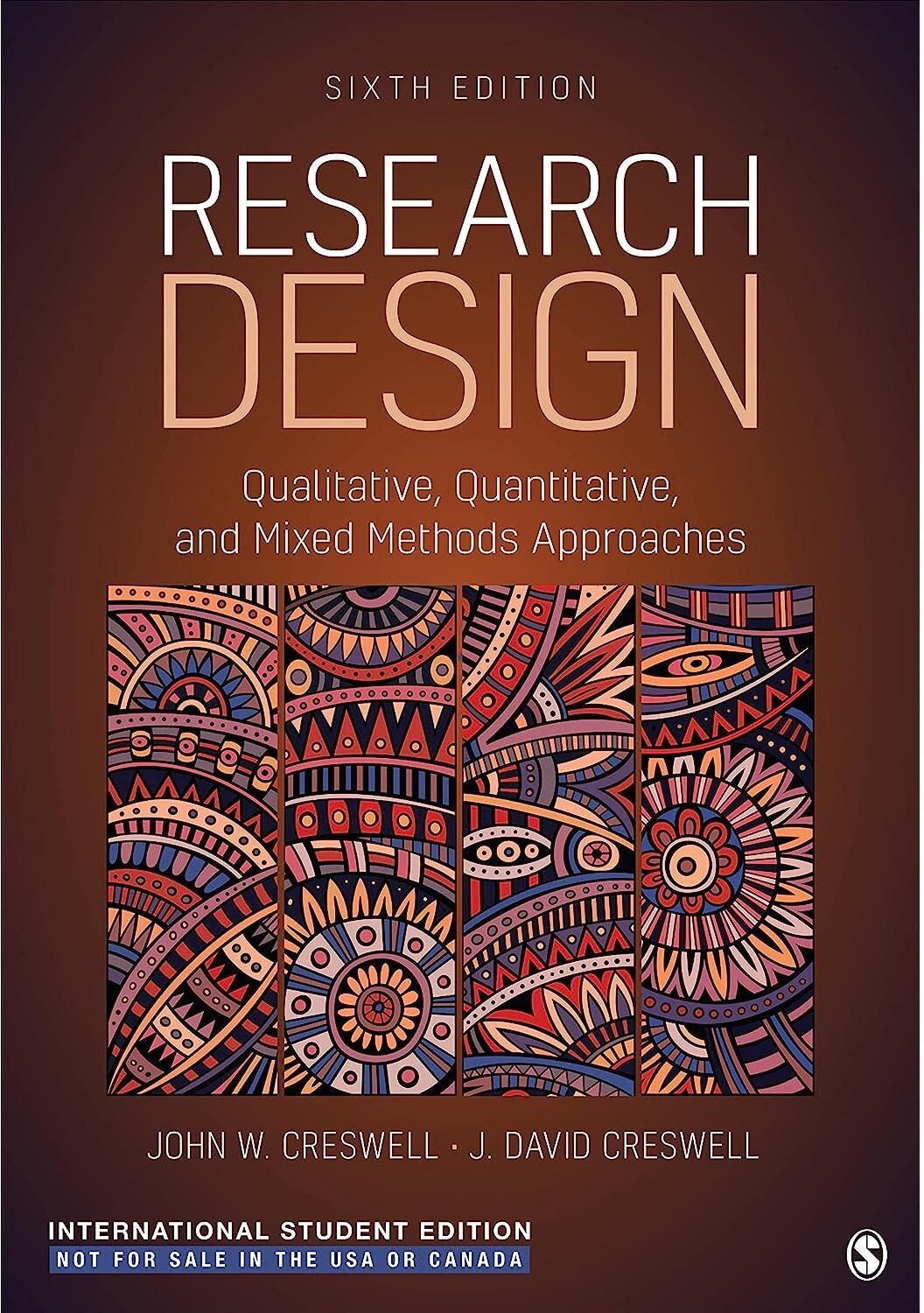
SAGE Publications Research Design - International Student Edition: Qualitative, Quantitative, and Mixed Methods ApproachesThe new edition of the best-selling text, Research Design: Qualitative, Quantitative, and Mixed Methods Approaches, continues the pioneering tradition of providing clear and concise instruction for understanding research and developing proposals for all three approaches. John W. Creswell and co-author J. David Creswell include a preliminary consideration of philosophical assumptions, a review of the literature, an assessment of the use of theory in research approaches, and reflections about the importance of writing and ethics in scholarly inquiry in a way that is applicable to all types of research. Key elements of the research process, giving specific attention to each approach. The book has been lauded for its language and tone, which are both accessible and inviting. It is a text that students keep and continue to use as a resource throughout their studies, once the specific class is over. The Sixth Edition includes more coverage of community-based participatory research, comparisons of qualitative and quantitative research, an expanded glossary with basic terms, updated examples of social, behavioural, and health research, new coverage of ethical requirements, updated APA 7th edition coverage, and additional exercises aimed at research projects.59,95 £*Shipping: 0,00 £Secure redirect to the provider
-
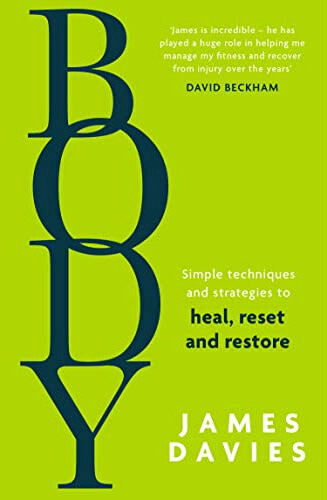
HQ Body: Simple techniques and strategies to heal, reset and restoreUltimate strategies to prevent pain and fuel your body to its fullest health potential. 'James is incredible - he has played a huge role in helping me manage my fitness and recover from injury over the years' David Beckham Simple techniques and strategies to HEAL From stress and anxiety, to everyday wear and tear and injury, life takes its toll on our bodies. Now, internationally renowned osteopath James Davies can help you heal your body. RESET With tips and tricks to help recognise, manage, and treat everyday aches and pains, this book will reset your approach to understanding your body. James presents a revolutionary blueprint for holistic body wellbeing. RESTORE Improve your wellbeing with exercises expertly designed to optimise your body. Enhance your health and mobility by understanding common conditions from arthritis and muscle strains, to IBS and stress, and empower yourself with the knowledge you need to achieve full-body health18,39 £*Shipping: 2,99 £Secure redirect to the provider
-
Tools, Home & Hobby Wooden Kids Balance Beam Montessori Stepping Stones For Coordination And Motor Skills Wooden Kids Balance Beam Montessori Stepping Stones For Coordination And Motor SkillsTurn everyday play into an exciting way to build confidence, movement, and coordination. This kids balance beam gives children ages 26 a fun way to practice balance while creating their own obstacle courses. The 3piece Montessori balance board set...129,97 $*Shipping: 0,00 $Secure redirect to the provider
-
Real Techniques Everything BrushHealth and Beauty Brushes and Accessories Real Techniques Everything Brush Designed to be easy to use and multifunctional, the Real Techniques Everything Face Brush blends seamlessly for a natural, flawless glow. All your multitasking dreams came true in the todo facial brush! It can be used with both powders and liquids.} This will quickly become your go-to brush. The oversized head and fluffy bristles provide light to medium coverage. Resolves uneven skin tone by allowing you to build your foundation. You will be left with a smooth and even makeup application. Whether you're packing it in your bag for a weekend getaway or freshening up after a long day, this brush can do it all with any of your makeup products. The all-over face brush works with any product format: foundations, powders, and bronzers are a perfect match. Shake and buff makeup products onto skin in a circular motion to blend. Made from UltraPlush™ synthetic hand-cut bristles, this brush is vegan and cruelty-free.9,26 £*Shipping: 3,99 £Secure redirect to the provider
-
How do you calculate the braking distance, the braking process, and the braking deceleration?
The braking distance can be calculated using the formula: braking distance = (initial velocity^2) / (2 * deceleration), where the deceleration is the rate at which the vehicle slows down. The braking process involves the driver applying the brakes, which causes friction between the brake pads and the wheels, leading to a decrease in the vehicle's speed. The braking deceleration can be calculated by dividing the change in velocity by the time it takes for the vehicle to come to a complete stop. **
-
How do you calculate the braking time and braking distance?
Braking time and braking distance can be calculated using the formula: Braking distance = (initial velocity^2) / (2 * deceleration) Where initial velocity is the speed of the vehicle before braking, and deceleration is the rate at which the vehicle slows down. Braking time can be calculated by dividing the braking distance by the initial velocity. These calculations are based on the assumption of constant deceleration, and may vary depending on factors such as road conditions and the vehicle's braking system. **
-
How do you calculate braking time and braking distance in physics?
In physics, braking time and braking distance can be calculated using the equations of motion and the principles of kinematics. The braking time can be calculated using the equation t = v/u, where t is the braking time, v is the final velocity, and u is the initial velocity. The braking distance can be calculated using the equation d = (v^2 - u^2) / (2a), where d is the braking distance and a is the deceleration. These equations take into account the initial and final velocities, as well as the deceleration of the object to determine the braking time and distance. **
-
What are the differences between braking to walking speed and braking?
Braking to walking speed typically involves gradually reducing speed until coming to a complete stop, whereas braking refers to the act of slowing down a moving vehicle. When braking to walking speed, the goal is to smoothly decelerate without any sudden stops, while braking may involve more forceful actions to slow down quickly. Additionally, braking to walking speed is often used in situations where a vehicle needs to stop at a precise location, such as at a crosswalk or intersection. **
Similar search terms for Braking
-
Real Techniques Everyday Essentials PackHealth and Beauty Brushes and Accessories Real Techniques Everyday Essentials Pack This pack contains: 400 Blush: Sharp, soft and fluffy bristles. Mix the powder blush evenly for a soft and natural look. Miracle Complexion Sponge: Soft and flexible foam. Mix the liquid base and the cream in a luminous and dewy finish. Use dry for full coverage or wet for a wet shine. 300 Deluxe Fold: Short and dense bristles. Layer and blend cream and powder eye shadows evenly in the crease of the eyes. 402 Adjustment: Soft and fluffy bristles. Use powder to highlight or fix dusts precisely for natural-looking lighting. 200 Expert Face: Firm bristles Buff liquid or cream base for a bright and perfect finish. Product characteristics: 100% cruelty free. How to clean: Clean weekly with our Brush Cleaning Gel to improve brush performance. You may see Miracle Complexion sponges with RT stamped on the sponge, do not fear, it is still your favorite sponge. Be sure to visit our Where to buy page to find a trusted retailer!19,41 £*Shipping: 3,99 £Secure redirect to the provider
-
Real Techniques Miracle Powder SpongeHealth and Beauty Brushes and Accessories Real Techniques Miracle Powder Sponge • Revolutionary foamtechnology, paired with aproprietary velvet-touchfinish to seamlessly set powder foundations. •Rounded sidesfor blending,flat edge for baking, and pointedtip for coverage. • Provides maximum powderpickup and transferralto the skin.6,98 £*Shipping: 3,99 £Secure redirect to the provider
-
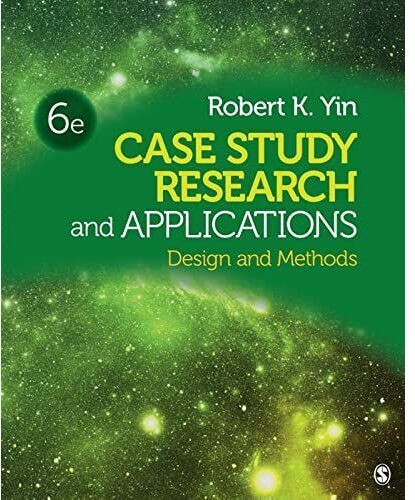
SAGE Publications Case Study Research and Applications: Design and MethodsRecognized as one of the most cited methodology books in the social sciences, the Sixth Edition of Robert K. Yin′s bestselling text provides a complete portal to the world of case study research. With the integration of 11 applications in this edition, the book gives readers access to exemplary case studies drawn from a wide variety of academic and applied fields. Ultimately, Case Study Research and Applications will guide students in the successful use and application of the case study research method.59,99 £*Shipping: 0,00 £Secure redirect to the provider
-
Is braking a reflex?
Braking can be considered a reflex in certain situations. When a driver reacts to a sudden obstacle or hazard on the road by immediately pressing the brake pedal, it can be seen as a reflexive action. This is because the response is automatic and occurs without conscious thought. However, braking can also be a learned behavior, as drivers are trained to use their brakes in specific situations through practice and experience. Therefore, while braking can be a reflex in some cases, it can also be a learned and intentional action. **
-
What is the difference between braking with a clutch and braking without?
Braking with a clutch involves pressing the clutch pedal while simultaneously applying the brakes, which disengages the engine from the transmission and allows the vehicle to coast to a stop. This method is often used in manual transmission vehicles to prevent stalling. On the other hand, braking without using the clutch means simply applying the brakes without disengaging the engine from the transmission, which can cause the vehicle to stall if the engine speed drops too low. In summary, the main difference is that braking with a clutch allows the vehicle to coast to a stop without stalling, while braking without the clutch can potentially lead to stalling if not done properly. **
-
What is the difference between a full braking and an emergency braking?
Full braking refers to applying the brakes with maximum force in a controlled manner to slow down or stop the vehicle. This can be done in response to normal traffic conditions or when approaching a stop sign or traffic light. On the other hand, emergency braking is a sudden and forceful application of the brakes in response to an unexpected hazard or danger, such as a pedestrian stepping into the road or a vehicle suddenly stopping in front. Emergency braking is typically done to avoid a collision and requires quick reflexes and a strong, immediate response from the driver. **
-
What is the formula for braking acceleration and braking time in physics?
The formula for braking acceleration is given by \( a = \frac{v_f - v_i}{t} \), where \( a \) is the braking acceleration, \( v_f \) is the final velocity, \( v_i \) is the initial velocity, and \( t \) is the time taken to come to a stop. The formula for braking time can be calculated using the equation \( t = \frac{v_f - v_i}{a} \), where \( t \) is the braking time. These formulas are used to calculate the rate at which an object slows down when braking. **
* All prices are inclusive of VAT and, if applicable, plus shipping costs. The offer information is based on the details provided by the respective shop and is updated through automated processes. Real-time updates do not occur, so deviations can occur in individual cases. ** Note: Parts of this content were created by AI.